The History of Eyeliner
From Egyptian kohl and Roman soot to the liquid pen and the 1960s cat eye, a short history of drawing around the eye.
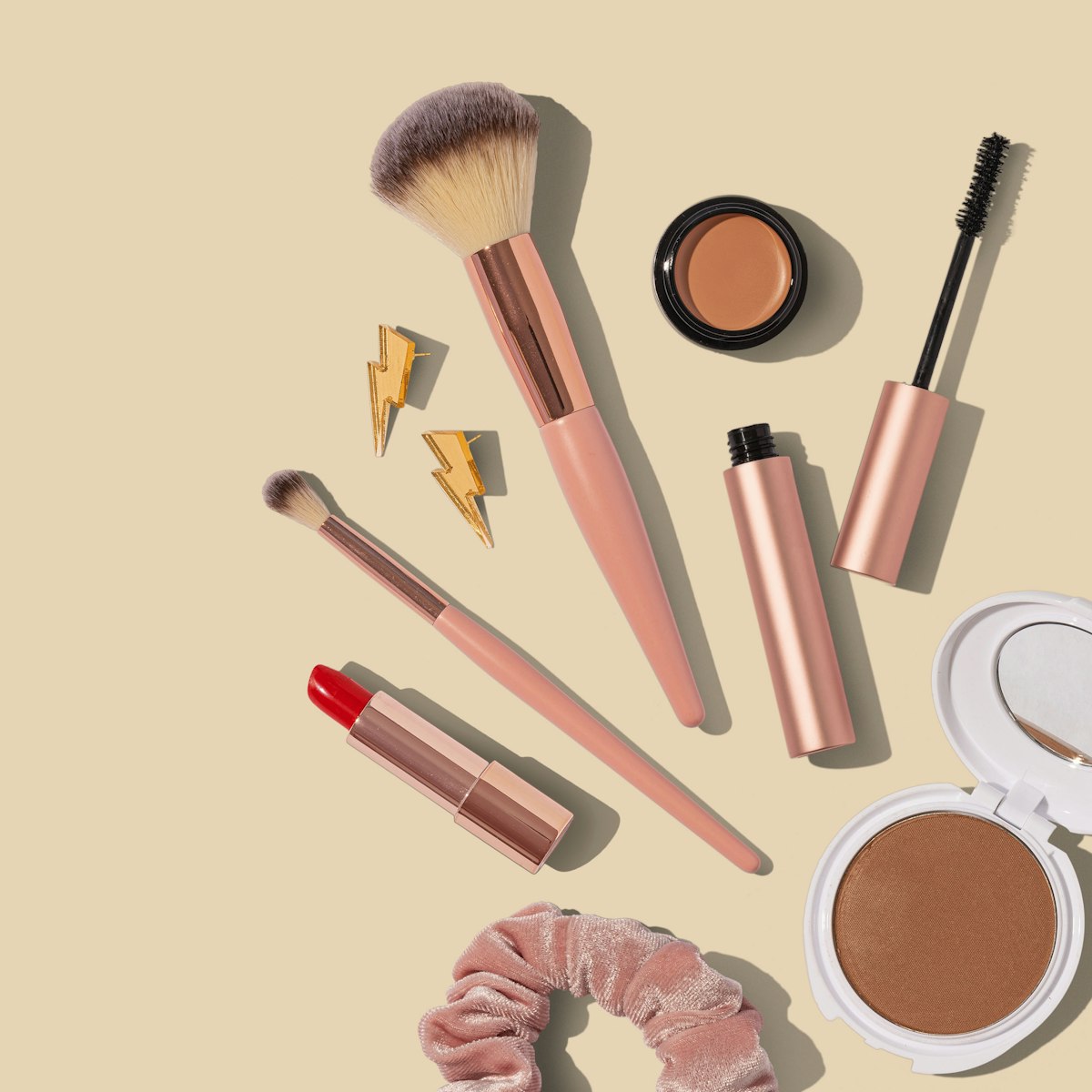
A single line around the eye can change the whole face. That is the appeal of eyeliner, and it is why the product has survived for thousands of years in one form or another. The ancient version was kohl, a dark powder applied with a small stick. The modern version comes in a pen, a pot of gel or a felt-tip marker. The materials have changed; the gesture has not.
Kohl in the ancient world
Egyptian kohl was made from soot, ground minerals and sometimes lead compounds, mixed with oil or water into a paste. It was applied to the eyelids and the waterline, the edge where the lashes grow. The effect was to outline the eye and make it appear larger and more defined. Both men and women wore it, and it had a practical side: the smoke of a fire or the glare of the sun off the desert was easier to bear with a dark line around the eye.
Kohl travelled. The Romans used a similar preparation, and the practice of darkening the eye area continued through the Byzantine and Islamic worlds. The word kohl came into English through Arabic, and the product itself kept its name across centuries and continents. In India, a preparation called kajal served the same purpose and is still used today, often made at home from soot and oils.
For a long time, the line around the eye was a matter of tradition and status rather than fashion in the modern sense. It was applied with a finger, a toothpick or a small wooden stick, and it was removed with oil.
The return of the line
In medieval Europe, cosmetics fell out of favour and the eye went undressed for centuries. When colour returned in the Renaissance, the focus was on the complexion and the lips. Eyeliner as a defined product had to wait until the nineteenth century.
The word eyeliner appeared in English in the late 1800s, and by the early twentieth century women were using a dark powder or cake applied with a wet brush. Hollywood changed everything again. Film lighting washed out pale lashes, and a dark line around the eye gave actors definition on screen. The studios developed products specifically for the camera, and the look spread to the wider public.
The 1920s and 1930s saw the rise of the pencil format. A wax-based pencil in a wooden casing was easier to control than a wet brush, and it could be sharpened for a fine line. The pencil remains the most common form of eyeliner today, valued for its precision and portability.
Liquid, gel and the cat eye
Liquid eyeliner arrived as a more dramatic option. Sold in a small bottle with a fine brush, it produced a sharp, dark line that pencil could not match. It was harder to apply, and it demanded a steady hand. The 1960s made it central to the most recognizable eye look of the decade: the cat eye, with a line that extended outward past the corner of the eye into a flick.
The look was tied to the fashion of the time. Twiggy’s heavy lashes and lined eyes, and the broader mod style, made a strong graphic eye part of a recognizable style. Through the 1970s and 1980s, eyeliner swung between soft and dramatic, with punk and new wave using heavy black lines as a deliberate contrast to conventional beauty.
The 1990s favoured softer browns and smudged lines, and the 2000s brought back the sharp liquid line with improved formulas. Gel liner, applied with a brush from a small pot, offered a middle ground: the intensity of liquid with more control. By the 2010s, the felt-tip pen had become popular because it combined a fine tip with the convenience of a marker.
What holds the line
Eyeliner is a pigment suspended in a base that sets as it dries. Pencils use waxes and oils, with carbon black or iron oxides for colour. A softer pencil has more oil and smudges easily, which is useful for a smoky eye and less useful if you want a sharp line that lasts. Liquid liner uses a darker pigment in a solvent that evaporates, leaving a film on the skin. Gel liner is a soft wax that stays workable longer before setting.
Waterproof versions use the same principle as waterproof mascara: less water in the formula, more wax and volatile solvents. They resist tears and humidity and need an oil-based remover. For someone with watery eyes or a long day ahead, the trade-off is usually worth it.
The skin around the eye is thin and moves constantly. No liner is completely immune to that movement, and a line that looks perfect at eight in the morning may be faded by four. Priming the lid gives the product something to grip, and setting with a matching powder can extend the wear.
Drawing the line
The practical advice has changed little over the centuries. Start at the outer corner and work inward for control; build the line in short strokes rather than one long sweep. Closer to the lashes looks softer; higher on the lid looks more graphic. A line that follows the natural shape of the eye suits most faces, and a flick requires practice.
The many forms of the line
The basic idea behind eyeliner has produced a surprising number of formats, each with its own following. Cake liner, the oldest of the modern forms, comes as a dry block that you wet with a brush. It gives a precise line and intense colour, but it takes time and a steady hand, which is why it survived longest among makeup artists and older users who learned to apply it before the pencil took over.
The pencil is the format most people reach for first. A wax-based core is wrapped in wood and sharpened to a point. Pencils vary in hardness: a soft pencil glides on and smudges easily, which suits a smoky eye, while a hard pencil holds a fine line but can drag on the delicate skin of the lid. Retractable pencils removed the need for a sharpener and became common in the late twentieth century, though some artists still prefer a wooden pencil because it can be cleaned and shaped precisely.
Liquid liner in a pot with a brush sits at the other end. The brush is dipped into the bottle and drawn along the lash line. It gives the sharpest line of any format and the most intense black, but it dries quickly and leaves little room for correction. Felt-tip pens, which became widespread in the 2010s, borrowed the idea of the marker to make the same look easier for a beginner. Gel liner, a soft wax in a jar, sits between liquid and pencil: it stays workable longer than liquid, so a line can be adjusted before it sets.
Each format also has a different answer to the question of where the line goes. A line drawn tight against the lashes, a technique sometimes called tightlining, makes the lashes look thicker without adding a visible stroke. A line on the lid creates a graphic effect. A soft line smudged outward gives the smoky eye that dominated the 1990s and keeps returning.
Eyeliner in its social setting
The meaning of a dark line around the eye has shifted with fashion and with the wider culture. In the 1960s it belonged to a young, mod style. In the 1970s and 1980s, punk and new wave used heavy black liner as a deliberate rejection of softer, conventional beauty. In the 1990s, a smudged line paired with pale lips was the default look for a generation, and a sharp liquid flick could read as dated.
The 2010s brought the cat eye back, helped by social media tutorials that broke the technique down into steps anyone could follow. A look that had once required a steady hand and years of practice became something a beginner could attempt with a felt-tip pen and a piece of tape as a guide. The change says as much about how beauty knowledge is shared now as it does about the product itself.
The choice of colour has followed its own path. Black has been the default since kohl, but brown gained ground in the 1990s as a softer option, and coloured liners in green, purple and blue appear in every decade. Navy and deep plum are often used as alternatives to black because they define the eye without the same hardness. White and nude liners have been used on the waterline to make the eyes look larger, a trick that works by contrast rather than by adding darkness.
Eyeliner has staying power because it does a lot with very little. A single dark stroke can make the eyes look larger, change the apparent shape of the face, or simply make a person feel more put together. The Egyptians understood that with soot and a stick. The rest has been a matter of making the line easier to draw and harder to smear.