The History of Lipstick
From crushed pigments in ancient Mesopotamia to the twist-up tube and the matte liquid revolution, a long history of colouring the mouth.
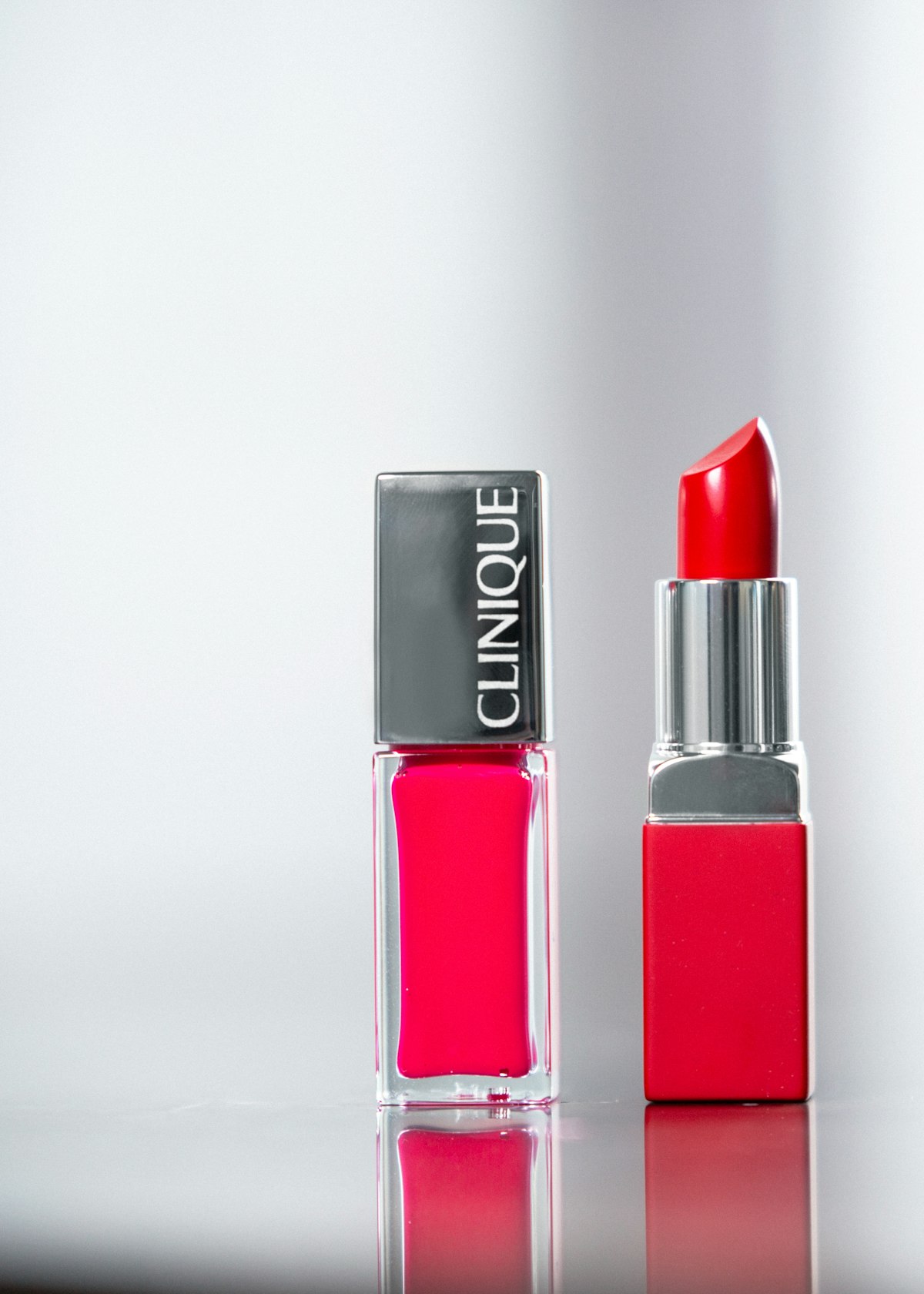
Colour on the mouth is older than the word for it. Archaeologists working at the Sumerian city of Ur, in what is now southern Iraq, found a small amount of red pigment in a tomb dating to around 3000 BCE. It was likely a mix of crushed minerals and oil, and it had been placed there with care. Whether it was meant for the lips or the cheeks is hard to say, but someone took the trouble to make it and keep it.
That is the useful thing to hold onto when thinking about lipstick: the impulse is ancient, while the object we recognise today is recent. The tube, the precise shade, the marketing promise — all of that is less than two centuries old.
Ancient pigments and painted mouths
Ancient Egypt left the clearest early record. Men and women there coloured their lips with a mix of beeswax, plant oils and red ochre, sometimes adding a dye made from the madder plant. The Egyptian palette was not limited to red; darker pigments were used for the eyes, and reds ranged from brick to deep wine. Cleopatra is often credited with a lipstick made from crushed cochineal insects, though the surviving evidence for that specific recipe is thin. What is well documented is that painting the face was an ordinary part of Egyptian grooming, not something reserved for a special occasion.
The Romans had a colour called fucus, a red dye derived from lichen or madder, which they applied to the lips and cheeks. It was cheap and it was available, which meant it was also looked down on. respectable Roman women were expected to appear pale and unadorned; a woman who painted her face risked being taken for someone of loose morals. The poet Ovid complained about it, which tells us that plenty of women ignored him.
After Rome, the habit faded in Europe for a long time. During the Middle Ages, pale skin and colourless lips were the ideal. The church treated cosmetics with suspicion, and a painted mouth could be read as a sign of vanity or something worse. There were exceptions. Byzantine and Islamic sources describe coloured lip salves, and trade with the East kept the knowledge of dyes alive even when fashion turned against them.
Colour comes back into fashion
The Renaissance reversed the verdict. In Venice, bright red lips became a signature of courtesans, and the colour spread outward from there. By the sixteenth century, a red called “Spanish red” was circulating in Europe, made from dyes such as brazilwood and cochineal. Queen Elizabeth I wore a red lip colour alongside her famous white face paint, and her portraits made the look fashionable at court.
Through the seventeenth and eighteenth centuries, rouge and lip colour settled into the routines of the wealthy. At Versailles, men as well as women wore colour on their lips. Recipes appeared in printed books, with names like “Spanish red” and “Chinese red,” though the formulas had little to do with either place. A typical one might combine beeswax, oil, and a dye derived from insects or plants, poured into a small pot.
The wording mattered. For a long time, people spoke of “lip salve” or “rouge for the lips.” The word lipstick does not show up in English until the late nineteenth century. By then, the industrial chemistry of dyes had changed what was possible. Synthetic reds arrived in the 1860s and 1870s, and with them came colours that were brighter, cheaper and more consistent than anything a plant could provide.
The tube changes everything
For centuries, lip colour lived in a pot and went on with a fingertip. The twist-up tube, which pushed a stick of colour up from a metal casing, was patented in the early twentieth century. Maurice Levy, a manufacturer working in the United States, is usually credited with a version of the device in 1915. It was a small mechanical change with a large consequence: lipstick became portable, clean to apply and easy to carry in a handbag.
The 1920s gave the new object its identity. The flapper look called for a small, bow-shaped mouth, and companies sold products to help achieve it. Max Factor, a Polish-born cosmetician who had built a business supplying make-up to film actors in Hollywood, developed a range of lip colours designed to read well on camera. In 1927, Tangee introduced a lipstick that supposedly changed colour with the wearer’s chemistry, a clever bit of marketing that sold the idea that a shade could be personal.
Two women dominated the next decades. Elizabeth Arden and Helena Rubinstein, rivals in the American beauty business, built companies that sold lipstick alongside a whole philosophy of grooming. Revlon entered the market in 1932 and, in 1950, launched Fire and Ice, a red promoted with a feature film of the same name. The advertising sold more than a colour. It sold the idea that a woman could change how the world read her by putting something on her mouth.
The formula, in plain terms
A stick of lipstick is mostly wax and oil. Beeswax gives it structure; carnauba and candelilla waxes raise the melting point so it survives a warm handbag. Castor oil, jojoba oil and lanolin keep it soft and help it glide. Pigments provide the colour. Iron oxides supply the earthy reds and browns; titanium dioxide makes it opaque; synthetic lakes such as D&C Red No. 27 give the bright, clear reds that plant dyes could never match.
One pigment is older than all the synthetics. Carmine, a deep red made from the cochineal insect, is still used in a large share of red lipsticks. It is effective and stable, but it is not vegan, and a number of brands now advertise carmine-free formulas. The debate has pushed manufacturers toward synthetic alternatives and, more recently, toward pigments derived from fermentation.
The finish depends on the balance of the formula. More wax and less oil gives a matte stick that lasts longer but can feel dry. More oil and less wax gives a glossy finish that moves more easily. The liquid lipsticks that took off in the mid-2010s flipped the usual format: a pigmented liquid went on with a wand and dried down to a flat, long-wearing matte. They were popular because they survived a full day without touch-ups, and unpopular for the same reason, since many formulas were difficult to remove.
A mouth that says something
Lipstick has carried political weight for most of its modern history. In the early twentieth century, suffragettes in Britain and the United States wore red lipstick as part of a deliberate style, and opponents sometimes used painted lips to mock women who wanted the vote. During the Second World War, red lipstick was promoted in Britain and the United States as a morale booster, a small assertion of normality while much else was rationed.
In the 1960s, pale lips belonged to the mod look while bold colours belonged to the sexual revolution. The 1980s made red lipstick a badge of professional power, worn with a tailored suit. In the 1990s it swung the other way, with brown and nude shades dominating, before gloss took over at the end of the decade. Each shift said something about what women were expected to be, and what they were allowed to want.
There is also the idea known as the lipstick index. The economist Leonard Lauder suggested in 2001 that lipstick sales rise during hard times, on the theory that people buy a small affordable luxury when larger purchases feel out of reach. The claim has been repeated often and tested poorly. Sales do rise in some recessions and fall in others. It is a memorable line rather than a law.
Making and choosing a shade
Industrial production starts with melting the waxes and oils in large kettles, then adding pigment and milling the mixture until no grit remains. The liquid is poured into moulds, cooled, and the formed sticks are pushed into their casings. A final pass over a flame gives the surface its smooth shine. The whole process is a matter of controlling temperature; a few degrees in either direction changes how the stick behaves.
For the person standing at a counter, the useful advice is unglamorous. Check the colour in daylight if you can, since shop lighting flatters everything. Look at the undertone, not just the depth; a red with blue in it will read differently from one with orange. Consider what you will eat and drink, because that determines how often you will reapply. And remember that a shade looks different on every face it touches, which is why a red that is perfect on someone else can turn grey on you.
The history of lipstick is not a straight line of improvement. It is a record of people finding new ways to make a red that stays on, and new reasons to want one. The tube made that red portable. Hollywood made it desirable. Chemistry made it cheap. The rest was up to the person wearing it.